Monica Messer
Stories about marriage, motherhood, money, and the family dynamics, institutions and legacies that shape us.

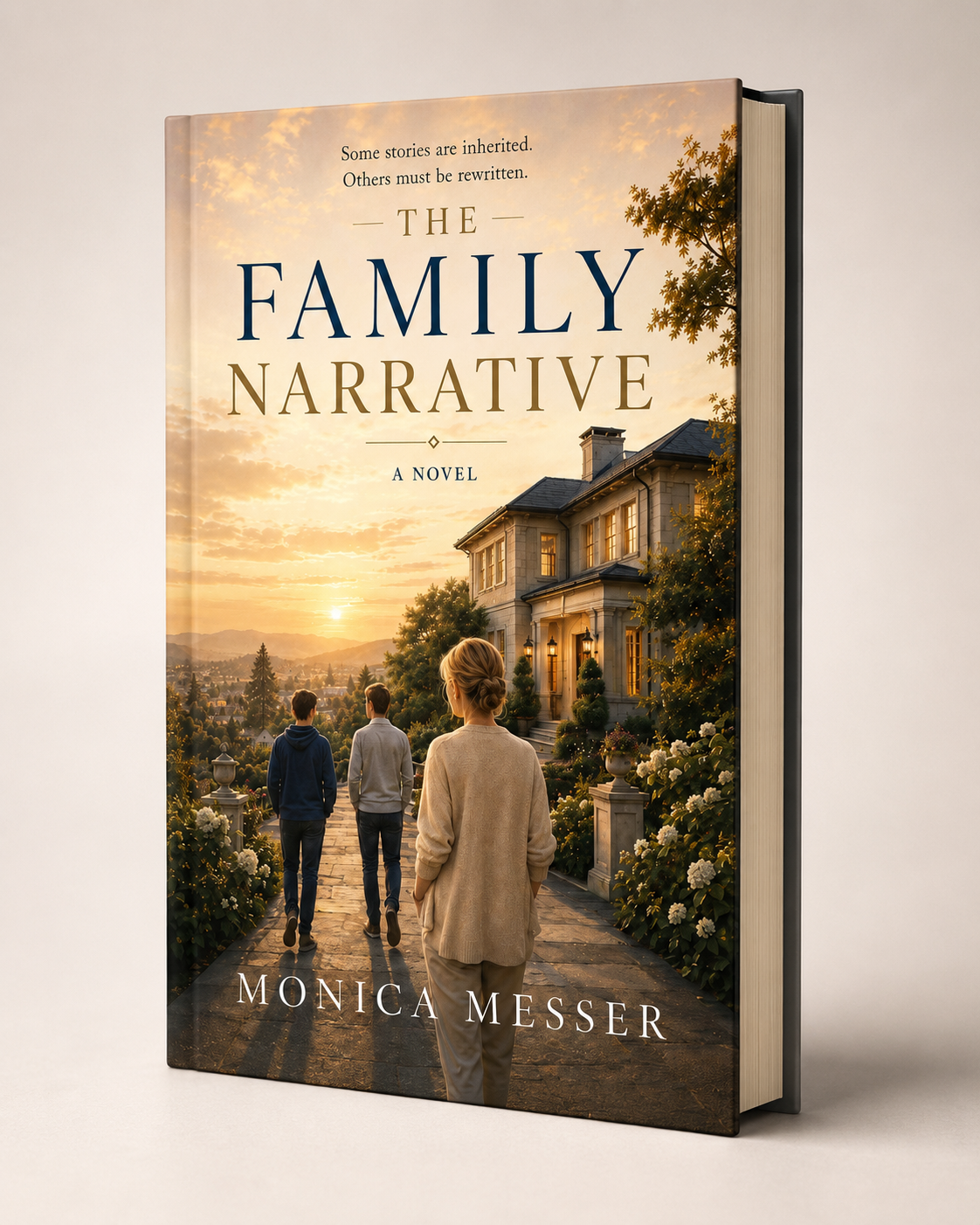
The Family Narrative
Every family has a story.
Frances Stanton has spent decades building a life that works. A respected professor. A beautiful home in Los Gatos. Two sons nearly grown. A husband whose family name opens doors at the university, in the community, and in every room that matters.
Then, over lunch on her fifty-fourth birthday, Frances overhears a conversation that makes her question everything she thought she knew about her marriage.
At first, she believes the betrayal is an affair. But as the truth surfaces, Frances discovers something far larger: hidden debt, addiction, family complicity, institutional silence, and a carefully protected version of the Stanton story that everyone around her seemed to understand before she did.
When her husband files for divorce before she has even caught up to the truth, Frances is forced to confront not only what he has hidden, but what she allowed herself not to examine—especially the financial life she trusted him to manage.
To move forward, she must learn how to protect herself without losing her compassion, how to tell her sons the truth without asking them to inherit its burden, and how to decide what parts of the Stanton story are worth carrying forward.
The Family Narrative is a novel about marriage, money, reputation, and the stories families preserve—until someone decides the truth matters more.
What do we owe the stories we inherit—and what do we choose to pass on?
Book Clubs
Is The Family Narrative Right for Your Book Club?
The Family Narrative is built for the kind of conversation that continues after everyone closes the book.
At its center is a marriage coming apart, but its questions reach far beyond whether Frances should stay or leave. What do partners owe one another about the past? When does trust become disengagement? And how much responsibility do we bear for truths someone else worked to keep from us?
The novel gives readers characters whose choices can be understood without necessarily being defended. Dick's addiction, privilege, and family system raise difficult questions about compassion and accountability. His parents force another: when does mercy become enabling, and can the kind of second chance that saved one generation damage the next?
Frances's choices invite equally rich debate about money, motherhood, marriage, and the truths parents owe their children. Ultimately, The Family Narrative asks: What do we want to inherit from our families, and what are we willing to leave behind? It offers no easy villains or easy absolution—only competing loyalties, morally complicated choices, and plenty of room for readers to disagree.
That is where the conversation begins.
What Monica Writes About
Clarity
Seeing things as they are—not as we were taught, promised, or pressured to see them—is the beginning of every good decision.
Reinvention
Starting over is not failure. Sometimes it is the first honest decision a woman gets to make for herself.
Financial Awareness
Money is not a dirty word. Silence around it can be devastating. Women deserve full, honest knowledge of their financial lives.
Friendship
Trusted friendships do more than comfort us. The people who know us best can help us see the blind spots we cannot see for ourselves.
Courage
Not the loud kind, but the quiet, daily courage to name what is true, leave what no longer fits, and begin again.
Moral Ambiguity
There is rarely one clean, correct way to navigate a difficult situation. Understanding a choice is not the same as excusing it.
Institutional Accountability
Institutions have responsibilities beyond protecting themselves. Passing a problem along does not resolve it.
What I'm Writing Next
The questions at the heart of The Family Narrative continue into Monica's next novels: What do we owe one another when we recognize something is wrong? When does looking away become complicity? And what, intentionally or not, do we pass on to the people who come after us?
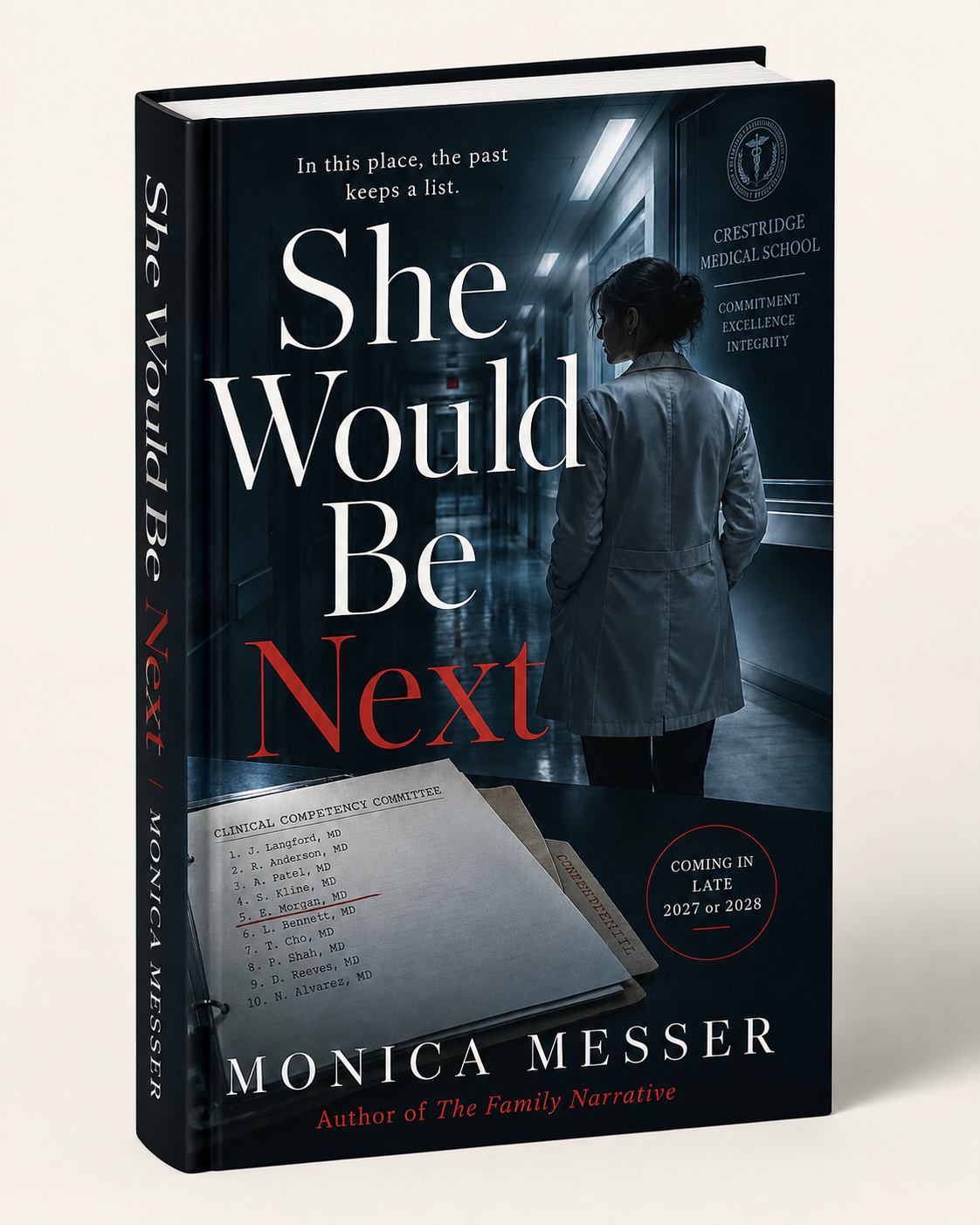
A novel in development
She Would Be Next
A medical school removes a troubled physician from its residency program and quietly allows him to move on.
Then another institution does the same. And another.
Years later, when members of one of the committees responsible for his dismissal become targets, a female physician and professor who served on that committee begins looking back at decisions everyone believed were finished.
What she discovers forces her to confront an uncomfortable question:
When an institution protects itself by passing a problem along, who bears responsibility for what happens next?
A novel of psychological suspense about professional silence, institutional self-protection, and the danger of believing that removing a threat is the same thing as resolving it.
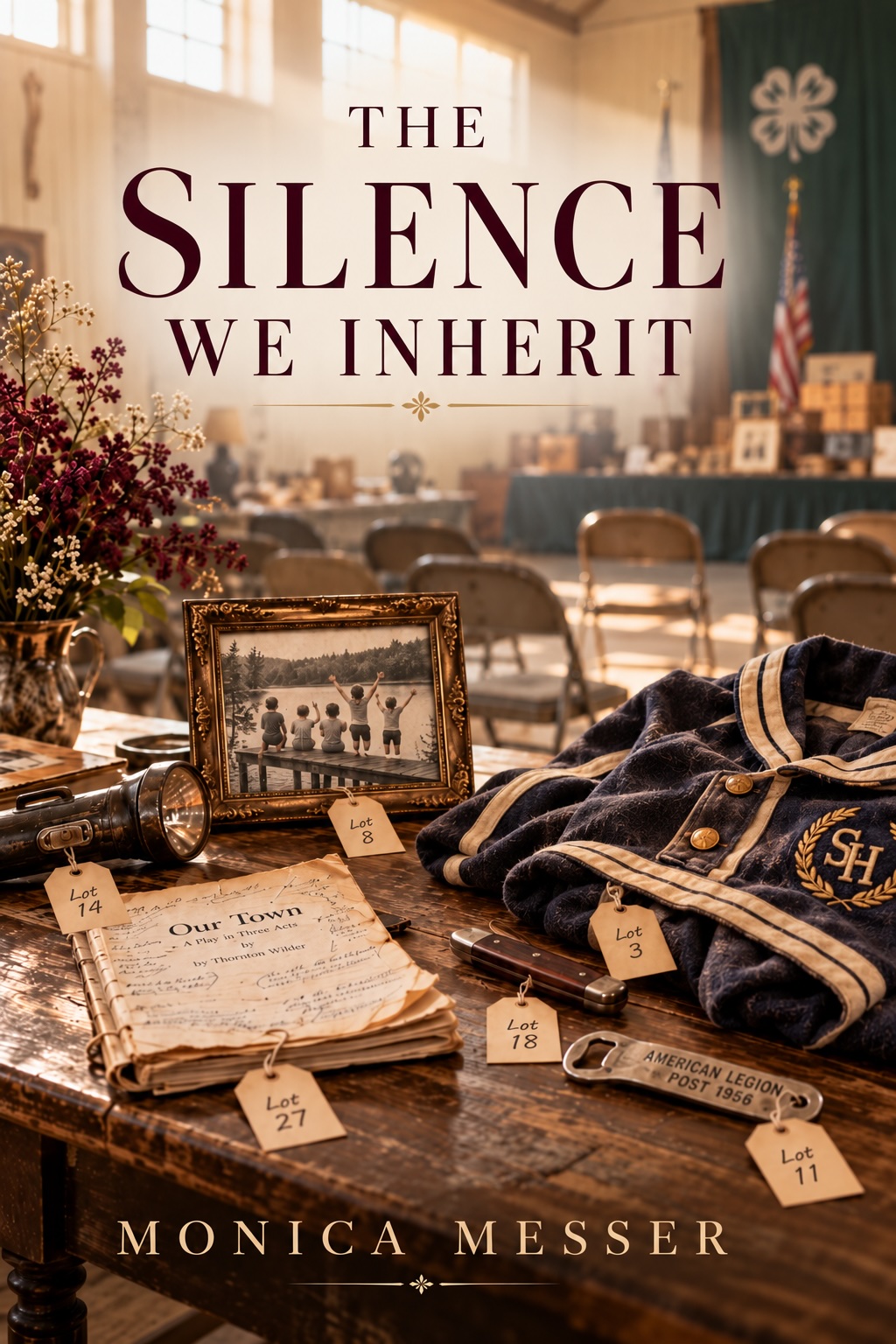
A novel in development
The Silence We Inherit
The Silence We Inherit is an upmarket book-club novel with a quiet thread of magical realism, set in a small Nebraska town where what people do not say can travel farther than what they leave behind.
At ninety-six, Sygne Thorson has spent a lifetime keeping other people’s confidences. Behind the bar, she heard about failing farms, affairs, family scandals, private guilt, and the compromises people made to survive. She became trusted because she never repeated what was entrusted to her. But in the final weeks of her life, morphine loosens the vault, and a story she tells her home-health nurse, Lisa, raises the possibility that Lisa and local auctioneer Charlie Chase may share the same father.
When Sygne dies and her husband Oliver follows five weeks later, their five adult children gather to settle nearly a century of belongings. Ordinary auction objects seem to carry an uncanny residue of courage, joy, and memory. But the most consequential inheritance cannot be sold: a boarding-school uniform, a family history interrupted by forced assimilation, and truths that were protected until no one remembered who had the right to know them.
As Charlie, Lisa, Elaine, and the Thorson family confront different versions of the past, The Silence We Inherit asks whether silence can be both kindness and harm—and what we owe one another once we finally know.
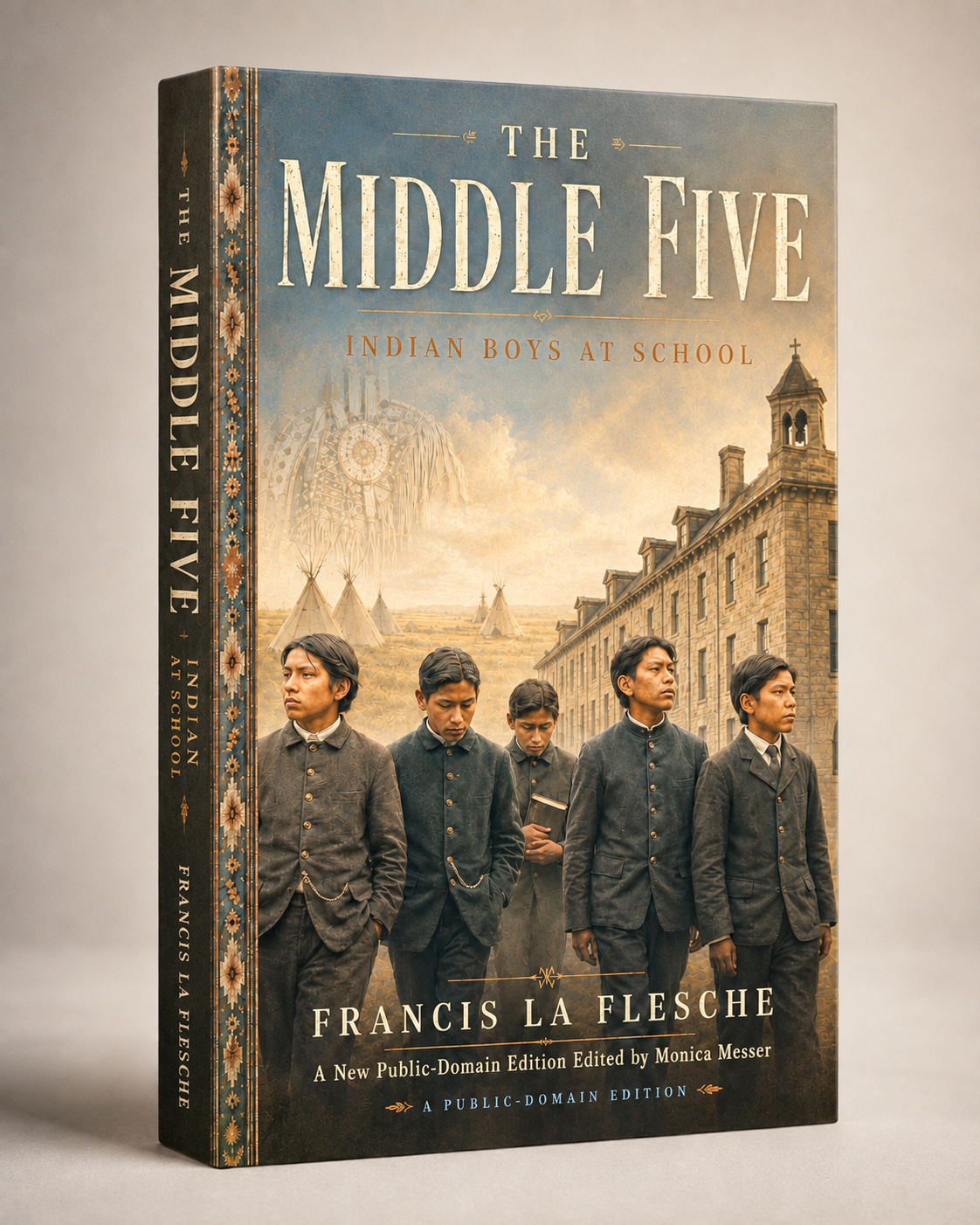
A public-domain edition
The Middle Five
Francis La Flesche · Foreword by Monica Messer
Originally published by Francis La Flesche, The Middle Five offers a rare and deeply personal account of Omaha boys navigating life at a nineteenth-century boarding school during a period of profound cultural change.
Monica discovered La Flesche's work while researching the Omaha Tribe for a novel and was moved by the wit, humanity, and historical value of his story. This edition is intended to help bring La Flesche's work to modern readers while honoring his voice and perspective.
As you read, begin with La Flesche's original preface. It is essential to understanding the spirit of the book and the world he was trying to preserve on the page.
About Monica
Monica Messer
Monica Messer is a debut novelist based in Omaha, Nebraska. After a forty-year career in technology and executive leadership, she turned her attention to fiction and to questions that have followed her throughout her life: how families construct their stories, how institutions protect themselves, how women navigate power and responsibility, and how the choices one generation makes shape the next.
She spent much of the 1990s in Northern California during the Internet startup era, an experience that informs the academic and professional world of The Family Narrative.
When she isn't in Omaha, Monica spends time in Los Angeles with her daughter and siblings and at her home in Belize with her husband, where she particularly loves to write.
Her debut novel, The Family Narrative, is complete at approximately 72,000 words.