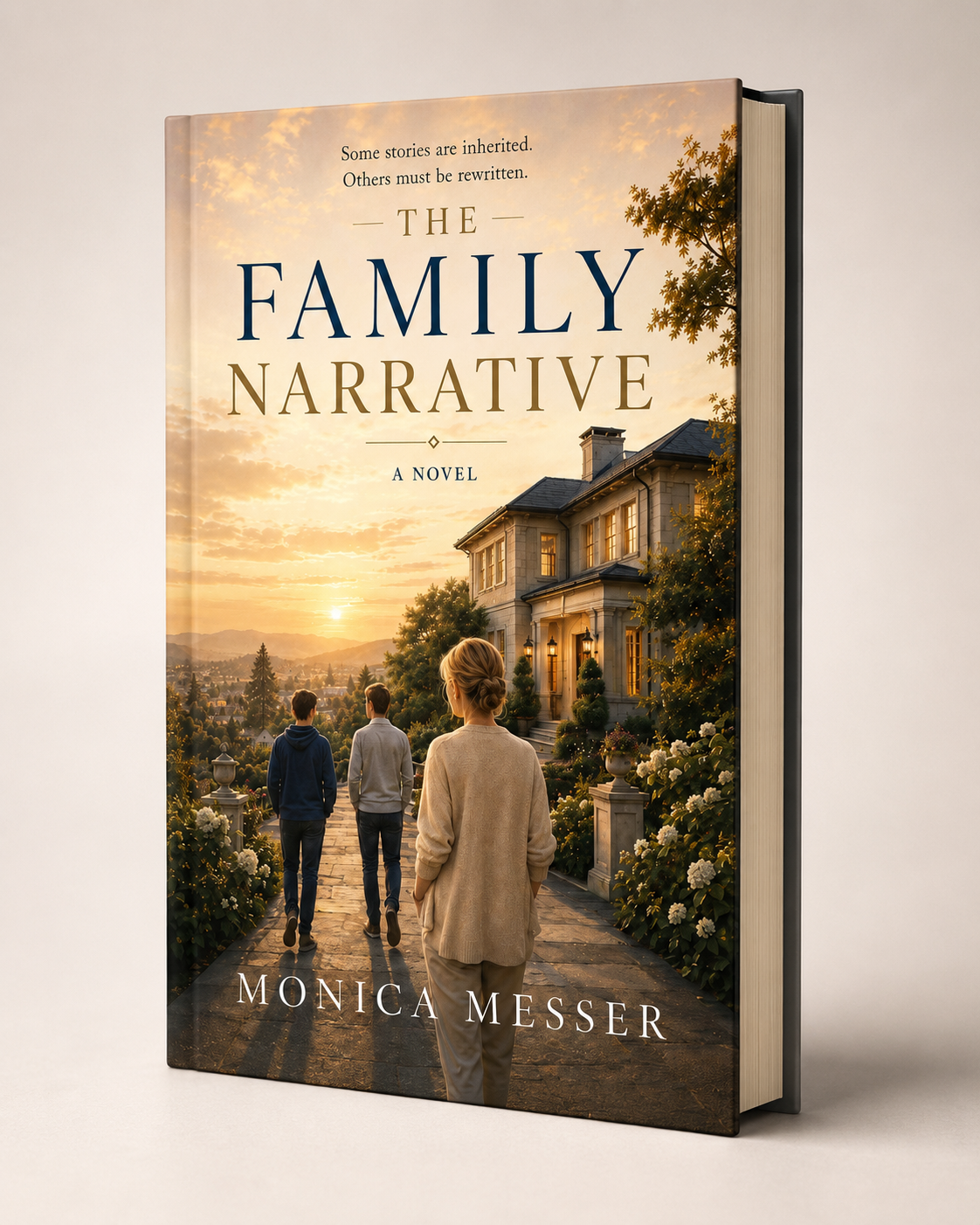
A Novel
The Family Narrative
Every family has a story.
Frances Stanton has spent decades building a life that works. A respected professor. A beautiful home in Los Gatos. Two sons nearly grown. A husband whose family name opens doors at the university, in the community, and in every room that matters.
Then, over lunch on her fifty-fourth birthday, Frances overhears a conversation that makes her question everything she thought she knew about her marriage.
At first, she believes the betrayal is an affair. But as the truth surfaces, Frances discovers something far larger: hidden debt, addiction, family complicity, institutional silence, and a carefully protected version of the Stanton story that everyone around her seemed to understand before she did.
When her husband files for divorce before she has even caught up to the truth, Frances is forced to confront not only what he has hidden, but what she allowed herself not to examine—especially the financial life she trusted him to manage.
To move forward, she must learn how to protect herself without losing her compassion, how to tell her sons the truth without asking them to inherit its burden, and how to decide what parts of the Stanton story are worth carrying forward.
The Family Narrative is a novel about marriage, money, reputation, and the stories families preserve—until someone decides the truth matters more.
What do we owe the stories we inherit—and what do we choose to pass on?
At the heart of the novel
- Financial independence and the responsibility to understand one's own financial life
- Marriage and the stories couples agree to believe
- The difference between deception and choosing not to look
- Family reputation and inherited narratives
- Motherhood and what parents pass to their children
- Institutional silence and self-protection
Is The Family Narrative Right for Your Book Club?
The Family Narrative is built for the kind of conversation that continues after everyone closes the book.
At its center is a marriage coming apart, but its questions reach far beyond whether Frances should stay or leave. What do partners owe one another about the past? When does trust become disengagement? And how much responsibility do we bear for truths someone else worked to keep from us?
The novel gives readers characters whose choices can be understood without necessarily being defended. Dick's addiction, privilege, and family system raise difficult questions about compassion and accountability. His parents force another: when does mercy become enabling, and can the kind of second chance that saved one generation damage the next?
Frances's choices invite equally rich debate about money, motherhood, marriage, and the truths parents owe their children. Ultimately, The Family Narrative asks: What do we want to inherit from our families, and what are we willing to leave behind? It offers no easy villains or easy absolution—only competing loyalties, morally complicated choices, and plenty of room for readers to disagree.
That is where the conversation begins.